
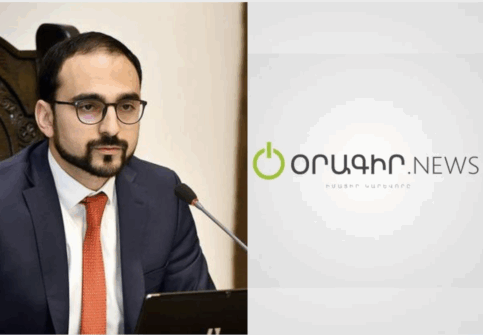
Case 1
Facts
On March 9, 2023, Oragir.news website published an article titled “Appetite Comes with Eating: Vivacell-MTS on Avinyan’s Radar.” On April 13 of the same year, Yerevan Mayor Tigran Avinyan filed a civil lawsuit with the Court of General Jurisdiction of Yerevan against Oragir Media Ltd., the founding entity behind the website in question (court case No. ED2/0260/02/23). According to the plaintiff, the information presented in the article constituted defamation, as it was tarnishing in nature and untrue. Specifically, the article alleged that he used his official position for personal interests, impeded the “VivaCell-MTS” sale deal through administrative leverage and pushed for the company to be sold to him, managed and controlled illicit finances (a slush fund), and exercised unlawful control over the procurement process.
Based on the circumstances outlined above, the plaintiff requested the court to oblige the defendant to publicly refute the tarnishing statements in the article and to pay him 6 million drams as compensation.
The court partially upheld the lawsuit, finding that the statements “Avinyan is hindering the execution of the deal through administrative leverage and pushing for the company to be sold to him” and “First, they will secure a position for one of their close associates, with a salary of several million drams, on the condition that most of that salary is funneled into the slash fund of the Civil Contract under Avinyan’s oversight, with the remainder kept for personal use. Second, they will control the procurement process through this person, ensuring that all purchases are made from their companies” were defamatory, as they were tarnishing in nature and the defendant failed to prove their accuracy. The court obliged Oragir Media Ltd. to publish a refutation, while substantially reducing the compensation sought and setting it at 250 thousand drams. The verdict was released on June 4, 2025. The defendant filed an appeal, which the Civil Court of Appeal accepted for proceedings on August 15, though no hearing date has yet been scheduled.
Case 2
Facts
On November 29, 2024, Oragir.news published an article titled “Tigran Avinyan Buys Former Ministry Building for High-Rise Construction.” On December 10 of the same year, Yerevan Mayor Tigran Avinyan filed a civil lawsuit—under Article 1087.1 of the Civil Code— with the Court of General Jurisdiction of Yerevan against Oragir Media Ltd., the founding entity behind the website in question (court case No. ED2/0260/02/23). According to the plaintiff, the publication contained the following two offensive statements: “…Tigran Avinyan bought the former ministry building for high-rise construction…” and “… that plot, including the building, was purchased by Yerevan Mayor Tigran Avinyan; moreover, he granted the permission for the construction of a high-rise there…” The mayor requested the court to oblige the defendant to publish the verdict, to refute the defamatory statements on the same website, and pay 3 million drams in compensation.
In the course of the trial, the plaintiff’s representative stated that they had submitted an inquiry to Yerevan Municipality, seeking clarification on whether the mayor had granted a construction permit to any individual to build a residential complex or a high-rise at the intersection of Yerevan’s Tumanyan and Hanrapetutyan streets or adjacent areas. They had also asked that, if such a permit existed, a copy be provided. In its response, the Municipality’s Department of Special Urban Development Programs stated that Yerevan Municipality had not issued any urban development document regarding the area adjacent to the intersection of Tumanyan and Hanrapetutyan streets in Kentron administrative district.
Additionally, the plaintiff’s representative stated that they had submitted an inquiry to the RA Cadastre Committee, asking to be informed whether any property was registered under Tigran Avinyan’s name at the intersection of Yerevan’s Tumanyan and Hanrapetutyan streets, and, if so, to receive a copy of the ownership certificate. In response, the RA Cadastre Committee provided a reference indicating that no property ownership or lease rights had been officially registered in the name of Tigran Armen Avinyan in Yerevan. Drawing upon these facts, the plaintiff’s representative claimed that the information published by the media was untrue and constituted defamation.
The court partially upheld the lawsuit. The verdict, issued on May 2, 2025, determined that the two statements in question contained false and inaccurate information, and therefore qualified as defamation. Accordingly, the court obliged the media to publish the judicial act, refute the defamatory statements and pay 300 thousand drams, reducing the amount sought by the plaintiff tenfold. On July 18, 2025, the defendant filed an appeal with the Civil Court of Appeal. As of October 31, no hearing date had been set.
CONCLUSION
It is beyond dispute that the information contained in both publications is of public interest. Nonetheless, this fact cannot override an individual’s right to dignity if the media outlet has not proven the veracity of the published information, or if it is not evident that measures have been taken to verify the facts. In this regard, the IDC observes that the defendant failed to indicate what sources were used, and if they opted not to disclose them, did not provide specific reasons for doing so or indicate what other objective circumstances had hindered the publication of accurate data.
In contrast, the plaintiff’s representative substantiated during the proceedings that they had submitted inquiries and received responses from public bodies, the content of which refuted the disseminated information.
The IDC also disagrees with Oragir Media Ltd.’s claims that the contested statements are value judgments that are not subject to proof. The analysis of the publications shows that the content of these statements comprises factual data, rather than judgments or evaluations. Or, even assuming that in some instances judgments were made, they were based on false and inaccurate data. Thus, the media violated paragraph 3 of Article 1087.1 of the Civil Code in both of its publications.
It is noteworthy that in both cases the courts substantially reduced the amounts of monetary compensation sought by the plaintiff, and it can be assumed that this was viewed as an application of the proportionality principle and a balancing of public and private interests. Indeed, in insult and defamation cases, if a media outlet is found to have violated the law, it is important for the court, when determining monetary compensation, to set a sum that does not impose disproportionately heavy financial burden on the editorial office and thereby threaten its future activities. At the same time, especially in situations where the plaintiff is a high-ranking official or a well-known political figure, it is necessary for courts to analyze and substantiate what considerations led to awarding monetary compensation, how the specific amount was calculated, and, most importantly, why the resolution of dispute could not be limited (concluded) solely to upholding the demands for a refutation and recovery of court costs. Meanwhile, the judicial acts in both of the above-mentioned cases contain no such justifications.
Once again, as in its previous conclusions, the IDC urges high-ranking public and political officials to refrain, to the extent possible, from taking legal action in matters of insult and defamation, to demonstrate tolerance toward discussions of issues of public importance on media platforms, and, in situations of disagreement, to first use out-of-court dispute resolution mechanisms by demanding that editorial offices publish a refutation or a response, followed, if appropriate, by an application to the Media Ethics Observatory or the Information Disputes Council.
In conclusion, the IDC determines that in both Cases 1 and 2, the defendant disseminated defamatory statements, as during the proceedings they failed to prove the veracity of the factual information presented therein and to substantiate that reasonable measures had been taken to determine the extent to which the data corresponded to reality.
Information Disputes Council
Shushan Doydoyan (IDC Secretary), President of Freedom of Information Center
Boris Navasardian, Honorary President of Yerevan Press Club
Ara Ghazaryan, Director of “Ara Ghazaryan” Law Firm
Aram Abrahamyan, Chief Editor of “Aravot” Daily
Ashot Melikyan, Chairman of Committee to Protect Freedom of Expression
Olga Safaryan, Lawyer